Designing a Nutritious Meal in Wartime Vietnam
- Althea

- May 9, 2025
- 1 min read
During a recent trip to Vietnam, I visited the Cu Chi Tunnels, a vast underground network used by the Viet Cong during the war. As a UX designer, I was struck by how every detail in these tunnels was a response to extreme constraint, especially when it came to food. It was a reminder that design often shines brightest under pressure.
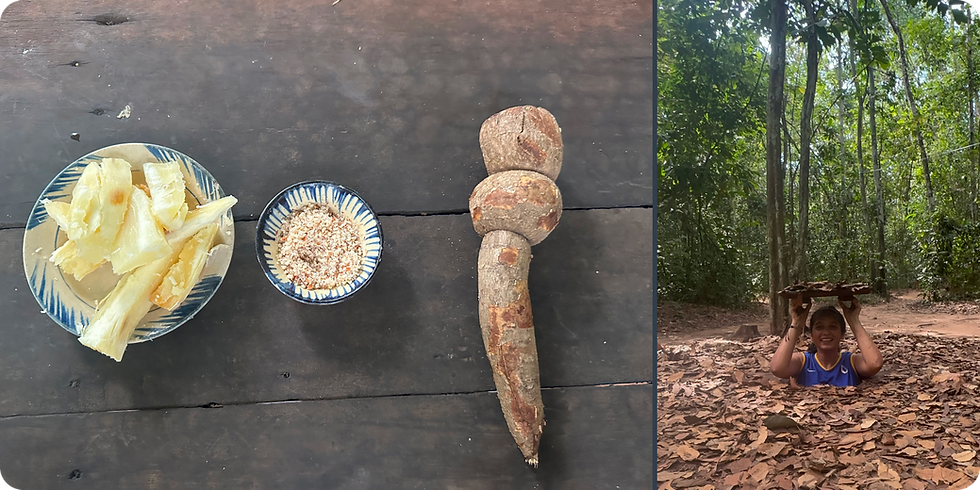
In the tunnels, meals were simple but strategic. One staple was boiled cassava, high in fiber and calories, which provided long-lasting energy while keeping soldiers lean enough to move through tight spaces. It was dipped in a mixture of ground peanuts and salt for added flavor, fats, and protein. Fermented fish sauce offered a dense source of protein and umami, used sparingly but effectively.
Even the act of cooking was a carefully considered system. Kitchens were placed deep underground, and smoke was vented through narrow bamboo pipes that snaked far from the tunnels. By the time smoke reached the surface, it was barely visible. To throw off enemy sniffer dogs, enemy uniforms were rubbed on the pipe ends to disguise scents.
This was survival by design. Every meal had to fuel not just the body but also the mission. Food, space, heat, and scent were all managed with precision. It reminded me that even in the most extreme conditions, thoughtful design can make the difference between vulnerability and resilience.


Comments